

Entrepreneurship, Innovation, and the Anticipation of a New Market : From the Business Computer to the Personal Computer
A Comparative Study of Steve Jobs, Bill Gates, and the Computer Revolution Depicted in Pirates of Silicon Valley
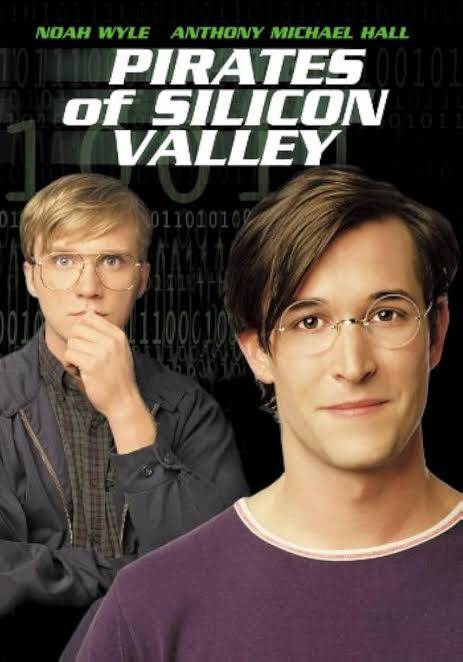
Pirates of Silicon Valley is an American television film directed by Martyn Burke, produced in 1999 and distributed on the Turner Network Television.
Pirates of Silicon Valley (1999) tells the story of the birth of personal computing through the rivalry between Steve Jobs and Bill Gates. The film is based on the book Fire in the Valley and primarily covers the period from 1971 to 1997.
SUMMARY
The history of modern computing represents one of the most remarkable examples of entrepreneurial foresight in the twentieth century. While computers were initially reserved for large corporations, universities, and government institutions, a few visionary entrepreneurs identified a market that did not yet exist: the personal computer market.
This dissertation analyzes the entrepreneurial strategies of Steve Jobs and Bill Gates, co-founders of Apple and Microsoft respectively. Through an examination of the events portrayed in the film Pirates of Silicon Valley, it highlights the mechanisms of innovation, anticipation of future needs, and the creation of entirely new markets.

Introduction
In the early 1970s, the computer industry was dominated by giants such as IBM.
Computers:
-
cost hundreds of thousands of dollars ;
-
occupied entire rooms;
-
required specialized technicians;
-
were exclusively intended for businesses and institutions.
At that time, the idea that an individual could own a computer at home seemed absurd.
Yet two young entrepreneurs, Steve Jobs and Bill Gates, anticipated a major revolution :
computing would leave the corporate world and enter people's homes.
This insight became the foundation for the creation of two of the most influential companies in history :
-
Apple
-
Microsoft
Chapter I : The Economic and Technological Context
1.1 Computing Before the Personal Computer Revolution
During the 1960s and early 1970s :
-
IBM dominated the global market ;
-
computing systems were centralized ;
-
users accessed systems through terminals ;
-
computing was reserved for organizations with significant financial resources.
The personal computer market did not exist.
No market research at the time suggested that individuals wanted to own a computer.
1.2 The Emergence of Microprocessors
The invention of the microprocessor radically changed the situation.
Miniaturization enabled :
-
lower costs ;
-
smaller machines ;
-
the emergence of new applications.
This technological innovation created an entirely new entrepreneurial opportunity.
Chapter II : Steve Jobs and Apple – The Visionary Entrepreneur
2.1 The Creation of Apple
In 1976, Steve Jobs and Steve Wozniak founded Apple.
Wozniak developed the technology.
Jobs envisioned the market.
This complementarity represents a classic example of a high-performing entrepreneurial team.
2.2 A Vision Against the Consensus
At the time, experts believed:
Ordinary people do not need computers.
Steve Jobs defended the opposite position.
He believed that computing would become an everyday tool comparable to :
-
the telephone ;
-
the television ;
-
household appliances.
This ability to see a market before it exists is a fundamental characteristic of the innovative entrepreneur.
2.3 Innovation Through User Experience
One of Jobs' greatest contributions was understanding that technology alone was not enough.
The Macintosh introduced :
-
a graphical user interface ;
-
the mouse ;
-
an intuitive approach to computing.
Jobs was not selling a computer.
He was selling a user experience.
Chapter III : Bill Gates and Microsoft – The Strategic Entrepreneur
3.1 Identifying Future Value
Bill Gates adopted a different approach.
He understood that :
software would become more important than hardware.
While most companies focused on manufacturing computers, Microsoft focused on developing software.
3.2 The IBM Agreement
The agreement signed with IBM marked a historic turning point.
Gates secured the right :
-
to provide the operating system ;
-
to retain its intellectual property rights ;
-
to sell the product to other manufacturers.
This decision transformed Microsoft into an indispensable industry player.
3.3 The Platform Strategy
Microsoft did not primarily sell computers.
The company created a standard.
Every manufacturer using Windows strengthened Microsoft's dominant market position.
Today, this platform strategy is replicated by companies such as:
-
Google ;
-
Apple ;
-
Amazon ;
-
Meta.
Chapter IV : Analysis of the Film Pirates of Silicon Valley
Pirates of Silicon Valley portrays the rivalry between Steve Jobs and Bill Gates.
The film illustrates several entrepreneurial concepts :
Opportunism
Both entrepreneurs rapidly exploited every available innovation.
Incremental Innovation
Contrary to popular belief, neither Apple nor Microsoft invented all the technologies they used.
Graphical user interfaces, for example, originated largely from research conducted at Xerox PARC.
Their genius lay in transforming these innovations into commercially viable products.
Strategic Competition
The film demonstrates that entrepreneurship is not solely about invention.
It also depends on :
-
negotiation ;
-
marketing ;
-
partnerships ;
-
speed of execution.
Chapter V : Anticipating a Market That Does Not Yet Exist
5.1 The Entrepreneurial Paradox
Consumers generally ask only for what they already know.
Before the personal computer:
-
nobody demanded a computer at home ;
-
nobody demanded a smartphone ;
-
nobody demanded a tablet.
Entrepreneurs must therefore anticipate invisible needs.
5.2 Creating Demand Rather Than Responding to It
Jobs and Gates did not respond to existing demand.
They created demand.
This approach represents the essence of disruptive innovation.
5.3 The Role of Vision
Entrepreneurial vision can be defined as :
the ability to imagine a different future and act before everyone else.
This capability appears to be the primary success factor behind the founders of Apple and Microsoft.
Chapter VI : Lessons for Contemporary Entrepreneurs
The stories of Steve Jobs and Bill Gates provide several key principles.
Principle 1 : Observe Technological Disruptions
Major opportunities often emerge during periods of significant technological change.
Today, these include :
-
artificial intelligence ;
-
robotics;
-
biotechnology ;
-
quantum computing.
Principle 2 : See Before Others Do
The most profitable markets are often invisible at the beginning.
Principle 3 : Simplify Innovation
Complex technology must become accessible to the general public.
Principle 4 : Control Strategic Value
Jobs controlled the user experience.
Gates controlled the software.
Both controlled the central element of their ecosystem.
Principle 5 : Think Long-Term
The success of Apple and Microsoft is the result of decades of investment and continuous improvement.
Conclusion
The story of Steve Jobs, Bill Gates, Apple, and Microsoft provides a remarkable demonstration of the entrepreneur's role in creating new markets.
At a time when computing was exclusively intended for businesses, these entrepreneurs identified an opportunity that no one else could yet perceive: the personal computer.
Their success was not based solely on technology, but on their ability to:
-
anticipate the future ;
-
understand societal transformations ;
-
simplify complex innovations ;
-
build sustainable business models.
The study of this revolution demonstrates that the greatest entrepreneurial opportunities are not always found in existing markets, but in those that have yet to be invented.
Selected Bibliography
-
The Innovators — Walter Isaacson.
-
Steve Jobs — Walter Isaacson.
-
Business @ the Speed of Thought — Bill Gates.
-
Fire in the Valley — Michael Swaine & Paul Freiberger.
-
Pirates of Silicon Valley — Martyn Burke.
Central Thesis
The greatest entrepreneurs do not predict the future; they build it by identifying opportunities that others cannot yet see. Steve Jobs and Bill Gates transformed the business computer into a universal tool that is now present in nearly every household around the world.