

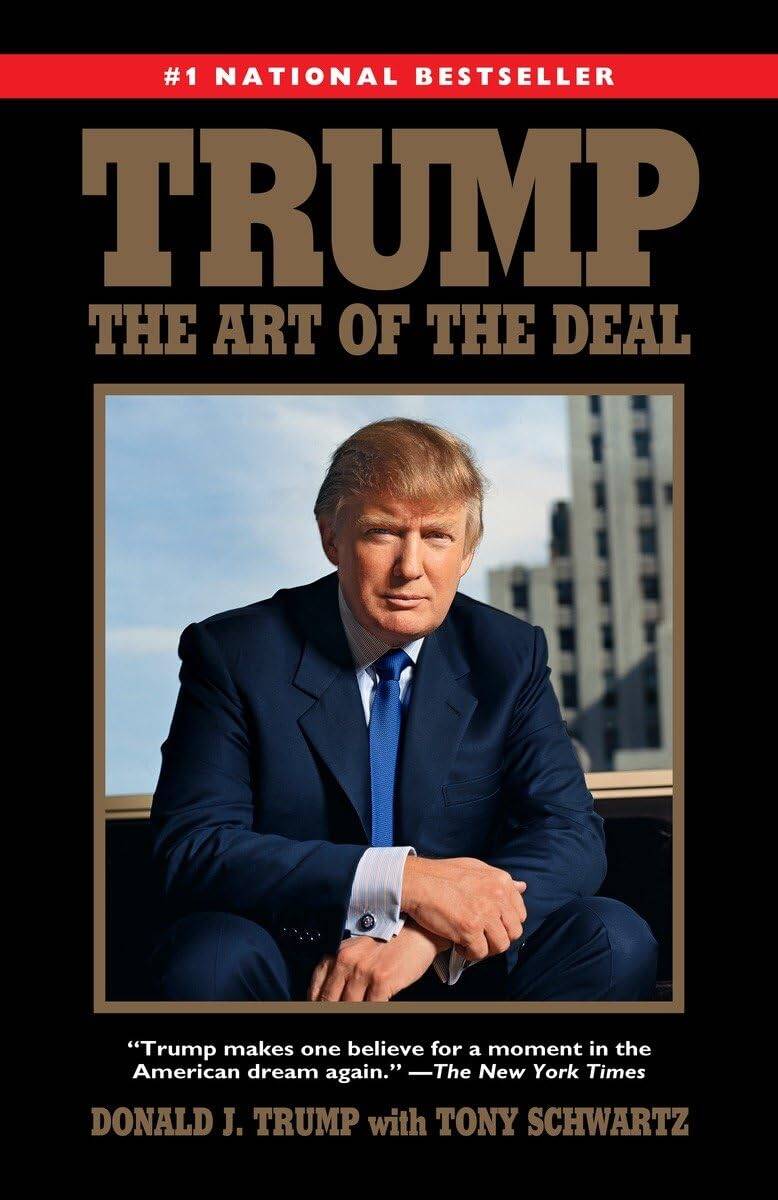
TRUMP : 2 "Trump Cards: The Elements of the Deal,"
Summary
In this chapter, "Trump Cards: The Elements of the Deal," Donald Trump outlines what he considers the fundamental principles of negotiation and entrepreneurial success. Rather than presenting an academic methodology, he describes a philosophy based on experience, instinct, psychology, and decision-making.
1. Think Big
According to Trump, the first principle is to think on a grand scale.
He argues that many people deliberately limit their ambitions out of fear of failure—or even fear of success. Since any worthwhile project already requires significant time and effort, he believes it makes more sense to pursue exceptional goals rather than settle for ordinary ones.
He explains that he has always preferred landmark projects capable of transforming an entire neighborhood or even a whole city.
2. Protect the Downside Before Pursuing the Upside
Trump argues that entrepreneurs should always prepare for the worst-case scenario.
Before making an investment, he focuses on minimizing potential losses. Once the downside is under control, he believes the profits will naturally follow.
This approach is rooted more in realism than in blind optimism.
3. Keep Multiple Options Open
Trump refuses to rely on a single solution.
In every negotiation, he develops several alternative scenarios so that he can quickly change direction if a project fails.
This flexibility reduces his dependence on any single partner or administrative decision.
4. Know Your Market Thoroughly
Trump places greater trust in his own judgment than in expensive market research.
He prefers speaking directly with residents, business owners, taxi drivers, and others who are familiar with the local environment in order to understand the market firsthand.
According to him, direct contact often provides more valuable insights than consulting firms.
5. Leverage Your Negotiating Power
Negotiating leverage is a central element of Trump's strategy.
The strongest negotiator is the one who possesses something the other party needs.
He therefore seeks to create or strengthen this advantage before entering any negotiation.
6. Enhance the Value of a Location
Contrary to conventional wisdom, Trump believes success does not depend solely on location.
An entrepreneur can create value through marketing, brand prestige, architecture, and effective communication.
While location remains important, he argues that its value can be significantly enhanced through the right strategy.
7. Master Communication
Even an outstanding product does not sell itself.
Trump emphasizes the importance of attracting media attention and public interest.
He believes that any publicity is beneficial as long as it draws attention to a project.
He recommends communicating boldly while remaining credible.
8. Fight Back When Attacked
When confronted with criticism or attacks, Trump advocates responding firmly.
In his view, leaving accusations unanswered only encourages opponents.
He believes entrepreneurs must defend both their reputation and their projects with determination.
9. Deliver on Your Promises
Promotion alone is not enough.
In the long run, only the actual quality of a product or project can build a lasting reputation.
Eventually, every promise is measured against real-world results.
10. Control Costs Rigorously
Trump stresses the importance of continuous financial discipline.
Every expense should be justified.
Even on projects worth hundreds of millions of dollars, he closely monitors costs because he believes that small savings ultimately generate significant financial gains.
11. Enjoy What You Do
The final principle is more personal.
Trump explains that money has never been his primary motivation.
What truly drives him is the excitement of building projects, negotiating deals, overcoming challenges, and achieving success.
For him, entrepreneurship is above all a strategic game that he genuinely enjoys.
The 11 Principles of The Art of the Deal
-
Think big.
-
Protect the downside before pursuing profits.
-
Keep multiple options open.
-
Understand your market thoroughly.
-
Leverage your negotiating power.
-
Create value rather than simply relying on location.
-
Master communication and media relations.
-
Defend yourself firmly.
-
Deliver what you promise.
-
Control every cost.
-
Enjoy the process.
Critical Analysis
This chapter is not a scientific management textbook but rather Donald Trump's personal account of how he claims to have developed his real estate business. Several principles—including thinking big, managing risk, maintaining multiple options, understanding the market, and controlling costs—are widely recognized in business strategy and entrepreneurship. However, other aspects, such as the deliberate use of media hyperbole and a systematic willingness to engage in confrontation, are more controversial and do not represent a consensus among management scholars or business experts.